Choosing an encrypted messaging app: 6 questions before you install
A short checklist for picking an encrypted messenger: phone numbers, default E2EE, jurisdiction, metadata, team use and the phone underneath.

A short checklist for picking an encrypted messenger: phone numbers, default E2EE, jurisdiction, metadata, team use and the phone underneath.

Only one item carries explicit security framing: openclaw 2026.9.34, an extended-stable gateway release positioned as the project's LTS line. Everything else on the wire today is incremental maintenance spread thin across Self-hosting, AI, Nostr, and Privacy, each landing five or six releases with no single beat dominating. VeraCrypt's point release does touch security token handling, but ships without the urgency markers seen on other hardening fixes. StartOS pushes two coordinated updates to StartTunnel and start-cli, the closest thing to a theme today. Read it as a wide, shallow day: patch inventories everywhere, no fires.
Silent Node sells anonymous offshore servers, but its live status page is drawn with random numbers, its company and history do not check out, and every door — servers, support, even a pre-sales question — opens only after a deposit into a balance with no withdrawal. We walked through it as a user, without paying.
Five quick checks before buying a travel eSIM if you'd rather not hand over ID: phone support, data-only, what's asked, payment, expiry.

Two releases carry explicit security urgency: Tails 7.15.1 strips a compromised certificate authority in an emergency build, and Trilium 0.106.1 ships a marked-important security fix for its server and Docker images. Everything else is routine. AI again dominates the volume, ten items, mostly SDK and CLI point releases from Qwen, Ollama, Anthropic, and llama.cpp, with Diffusers 0.42.0 the lone release adding new model support rather than patching existing code. Privacy trails close behind at seven items, largely version bumps. Bitcoin and Self-hosting stay quiet. Read the day as two real fixes surrounded by background maintenance.
A short, plain explainer on PGP versus SIM-level privacy, from the Ghost SIMs team.

X ou Nostr ? Comprendre les clés, les relais et les applis, garder votre identité, et faire vos premiers pas sur Nostr avec Primal, sans donnée personnelle.

The eMudhra CA distrust cycle keeps surfacing days after it first appeared: ntfy, Paperless-ngx, and openclaw all ship this cycle rejecting or replacing the compromised intermediate, spanning monitoring, document management, and AI tooling. Three releases carry explicit security flags, Bisq's Tor update, Uptime Kuma's cert and SSL fixes, DAVx5's account-creation exception handling, but the broader 46-item day is dominated by dependency and toolchain bumps rather than new capability. AI remains the largest single beat at 13 items, still no model releases, mostly SDK, CLI, and runtime patches. Bitcoin and Self-hosting trail at 10 each, Privacy at 9. Read today as continued infrastructure hardening against last week's CA incident, not a day of feature shipping.
Why browser-native video tools matter: editing, compressing and converting video locally means private footage never gets uploaded to a server. A practical look at client-side video processing.
🕵️♂️ Ogni pagamento che fai con Bitcoin è pubblico, per sempre.

Four flagged security releases headline a 49-item day, but the more telling pattern runs underneath them: Immich, ESP-Miner, and NodeGuard all ship patches this cycle distrusting or replacing compromised eMudhra CA intermediates. That is a supply-chain trust issue touching self-hosted photo storage, Bitcoin mining firmware, and node infrastructure at once, independent of beat. Layer on the four CVE-driven patches in Taproot Assets, FreshRSS, Karakeep, and Coolify, and the day reads as cleanup, not capability. AI stays the single largest beat at 12 items, all routine SDK and CLI bumps with no model releases. Bitcoin and Self-hosting trail at 10 apiece, Privacy at 12. The operative move today is patching, not evaluating new features.
AMLBot investigated 250+ crypto crime cases this year with $291.6M in reported losses. Hacks dominate exchange cases, and stolen stablecoins are swapped into BTC and ETH within hours, which is why honest swaps get frozen too.

Ce guide a pour but de donner quelques conseils pour gérer vos bitcoins de manière totalement souveraine, bien entendu il n’est pas question de vous inciter à ne pas déclarer vos bitcoins, néanmoins avec ce guide vous êtes le seul décisionnaire.
[](https://sea.onlyfuns.win/ydt?q=jennifer%20fabri%20nua) [View Full Gallery](https://sea.onlyfuns.win/ydt?q=jennifer%20fa...
Tienda digital sin cuentas, sin correos y sin rastreo — todo pagado en ZEC blindado.
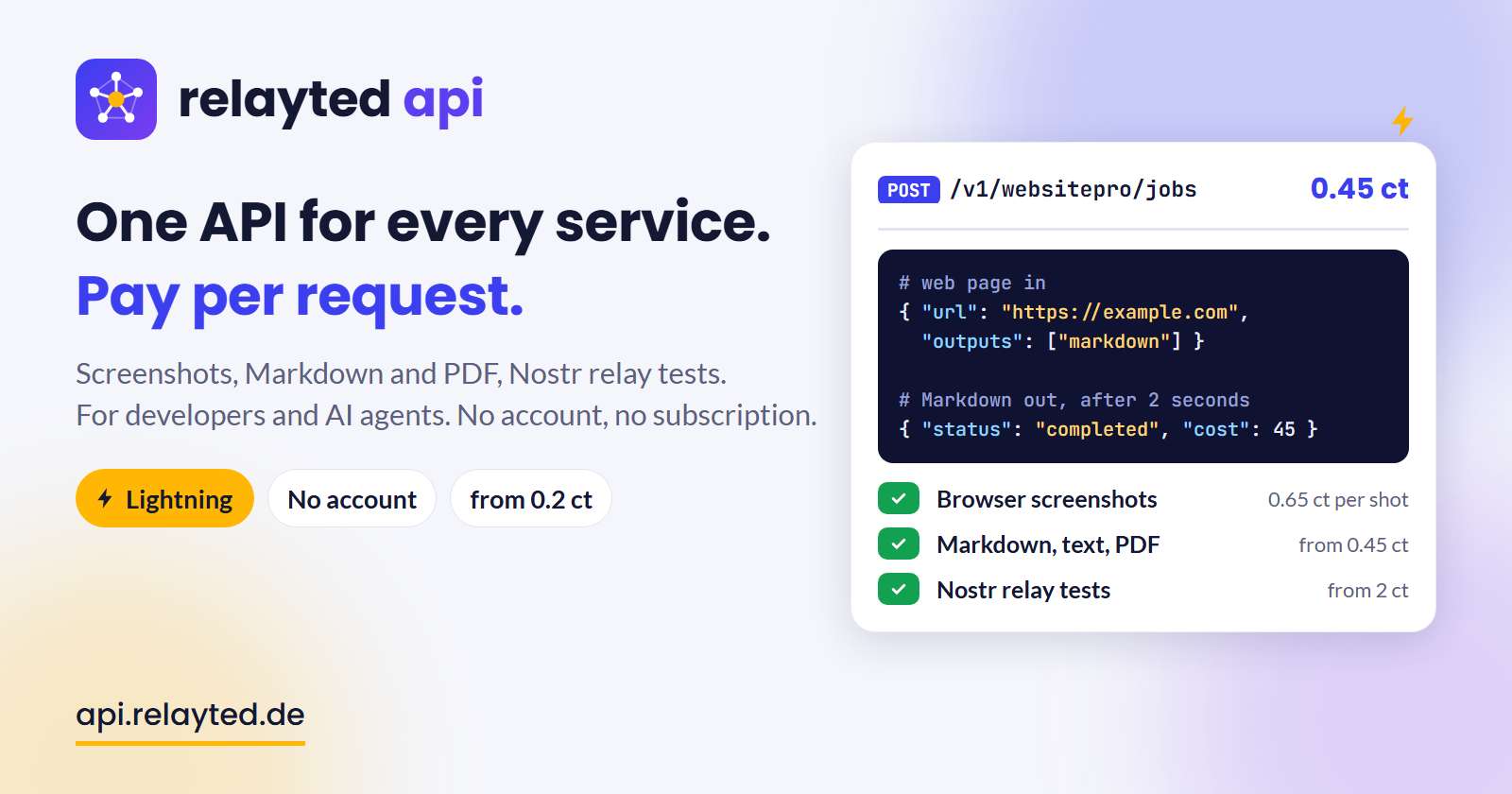
*Browser screenshots, web pages as Markdown or PDF, and Nostr relay tests are now available as an API. One key, one balance, fixed prices per item. Built for developers and AI agents. No sign-up, no subscription, no credit card.*
LetsExchange stopped exchange operations on October 1, 2026 at 07:00 UTC. Our last quote came at 06:59:57. What is known, and what to do with an open order.
On Oct 1, 2026 NEAR Intents lost about $3.8M through a bug between its Omni deposit and withdrawal system and its contract. What happened and what it means.
On Sept 12, 2026 an attacker drained 736,442 USDT from Chainflip's TRON vault by adding a memo to already-signed transactions. What happened, who pays, what it means.
Bitget lost $387.5M on Sept 24, 2026. How attackers got in, how the funds moved through THORChain and NEAR Intents, and how to avoid tainted coins.
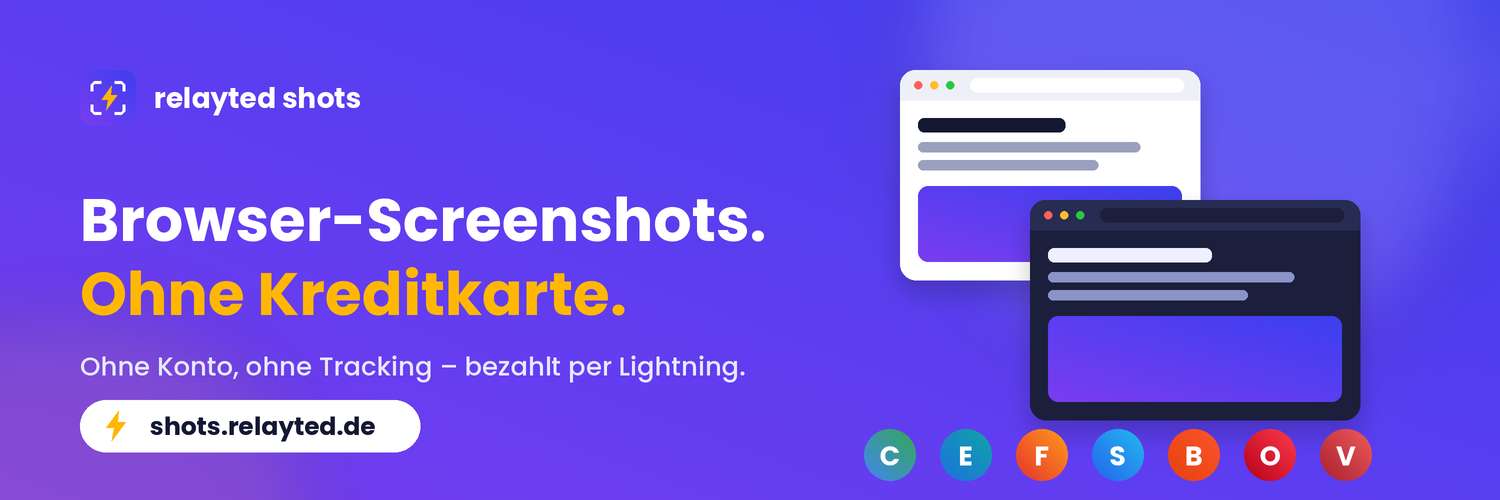
Relayted Shots erstellt Browser-Screenshots deiner Website ohne Konto, Kreditkarte, Tracking, Werbung oder Abo. Du gibst URL, Browser und Bildschirmgrößen an, bezahlst per Lightning und bekommst die Screenshots als Vorschau bzw. oder zum Download als ZIP-Datei.
Every product, every price. No accounts, no website, no data. One encrypted group link for our complete storefront, catalog, and support desk.
Überwachung braucht keine Totalerfassung. Ein einziger Datenpunkt am Eingang reicht. Warum Bitcoin und Nostr genau dieses Muster adressieren — und was das strukturell bedeutet.

Deepfakes, forged audio, and synthetic videos are dismantling the foundations of digital trust. This article explores why the next major internet crisis will not be about censorship — but about proving who actually said what. From C2PA to Nostr, a look at the technologies fighting for the future of authenticity.

Du kaufst Bitcoin weil du frei sein willst. Raus aus dem kaputten Fiat-System, weg von der Kontrolle der Zentralbanken. Und was ist dein erster Schritt in diese angebliche Freiheit? Du scannst deinen Reisepass ein, machst ein braves Selfie für den Ident-Check und lädst beides bei einer zentralen Börse hoch. Fällt dir was auf?

Spannung für Augen und Ohren: Erlebe ‚Die Bytes Detektive‘ als Lese-Krimi oder als packendes Hörspiel...... A² Kurzbeschreibung: Ein gesichtsloser Staatsapparat und ein abtrünniger Krypto-Anarchist jagen die dezentrale Parallelwirtschaft von Die Stadt. Ihr Ziel: die totale digitale Entblößung des Untergrunds. Als die Bits-Detektive auf eine alte Bekannte – die Krypto-Spezialistin Saferin – treffen, beginnt ein packender Schattenkrieg im neoviktorianischen Netz. Ihr einziges Schutzschild: das reale Meisterwerk „Praxeologie der Privatsphäre“ von Max Hillebrand als strategischer Leitfaden. Während Avatar im analogen Schlamm ein schwer bewachtes Telegrafenamt infiltriert, jagt die KI Aza die Algorithmen des Verrats. Am Ende entscheidet ein einziges, ungelöschtes Bit über die Zukunft der Freiheit.

California’s digital ID in Apple Wallet is sleek, fast, and convenient—but it reveals a deeper shift: identity is moving from something you *possess* to something a system must *verify*. This article contrasts that model with a self-sovereign approach—where you control your identity and present verifiable proofs when needed. The difference isn’t just technical. It’s foundational.

Reticulum and FIPS both build permissionless encrypted meshes, but they differ radically in routing, crypto primitives, and their relationship to IP.

Today I want to write down some thoughts on what it really means to have private communications over public infrastructure, and whether such a thing is even possible at all.

Privacy goes beyond something like usage of the best DM protocols. Beyond hardware and software. What's the point of all this if the other side of communication may still expose your secrets previously shared in the DMs?
Channel opens are on-chain. Routing nodes see payment amounts and timing. Probing attacks map balances in under a minute. The gap between "Lightning is private" and what observers can actually see.

Six protocol specs define how the Marmot Protocol delivers fully encrypted group messaging on Nostr without centralized servers or metadata leaks.

KYC in dating apps in particular is a very confusing example. But more generally, what's wrong with various kinds of verifications? What and how to properly solve without putting privacy at risk?

I've never trusted proxy functionality in various apps. There's something to learn from how Chromium-based browsers silently screwed it at some point, for example.

A simple challenge-response app can verify Nostr identities across any anonymous channel by querying the follow graph users already built.

Testing earbuds, wired mics, and USB-C wireless systems revealed the Yealink BH71 as the best mobile podcast solution for GrapheneOS.

Your smartphone surveils you by design. GrapheneOS transforms a Pixel into private hardware you actually control. Here's why it matters and how to do it.

Qubes OS assumes all software has bugs and isolates every application in separate virtual machines, containing breaches instead of preventing them.

Use ChaCha20-Poly1305 everywhere without hardware AES. Use AES-256-GCM with AES-NI. Never reuse nonces. Prefer AEAD always.

Nostr relays see everything - who connects, what they fetch, how often they post. Zero-knowledge cryptography can fix all three problems: Semaphore-based authentication hides which whitelisted user is connecting, private information retrieval hides which notes you're fetching, and Privacy Pass enables rate limiting without identity linkage.